Why It’s So Hard for Men to Start Their Mental Health Journey (and How to Begin)

Updated: Sep 30, 2025

Men’s mental health is often called a “silent crisis,” and the statistics are shocking. Men account for about 75% of all suicides in the United States. Still, surveys show men are much less likely than women to seek help. Only 35% of men said they would see a mental health professional, compared to 58% of women. In other words, many men choose to suffer in silence. Millennial men, in particular, have grown up hearing about the importance of mental health more than previous generations, but that doesn’t mean it’s easy for them to actually seek support.
Several factors lead to this hesitation. Social stigma and traditional gender norms play major roles. From a young age, many boys learn the message to “man up” and avoid showing emotions. They are told to “toughen up” or “suck it up” instead of being encouraged to express pain or fear. Over time, this conditioning teaches men that talking about feelings is taboo – something “real men” just don’t do.
As adult men, they may feel ashamed or “weak” for struggling internally, so they hide it. This stigma has consequences. Emotional suppression can lead to deeper feelings of shame when those suppressed emotions inevitably surface, often leaving anger as the only emotion men feel safe expressing. It’s no wonder that awareness of one’s own feelings becomes disconnected – many men aren’t even fully tuned in to what’s happening inside them emotionally. Psychiatrist Kevin Simon notes that boys are often taught early on to suppress emotions, so by adulthood, “Men tend not to seek services because they’re just not even fully aware of the emotions they’re having.”
Beyond stigma, there’s also the issue of not knowing how or where to start. “Many men just want to be seen and heard… [but] they might not have the resources to know where to begin their healing,” explains Bryce Spencer-Jones, host of Unstuck Yourself. If you’re a guy who hasn't truly opened up about mental health, the whole idea can seem overwhelming and unfamiliar. You might not have a clear plan. Maybe none of your male friends discuss their anxieties or go to therapy, so you've never seen what taking action looks like. In fact, feeling alone in your struggle is a common experience. As one young man, Lewis, recalled: “My friends didn’t speak out about feeling down or worried, I assumed it was just me.” This feeling that “it’s just me” can further isolate men and delay them from seeking help.
Toxic Masculinity and the “Man Box”
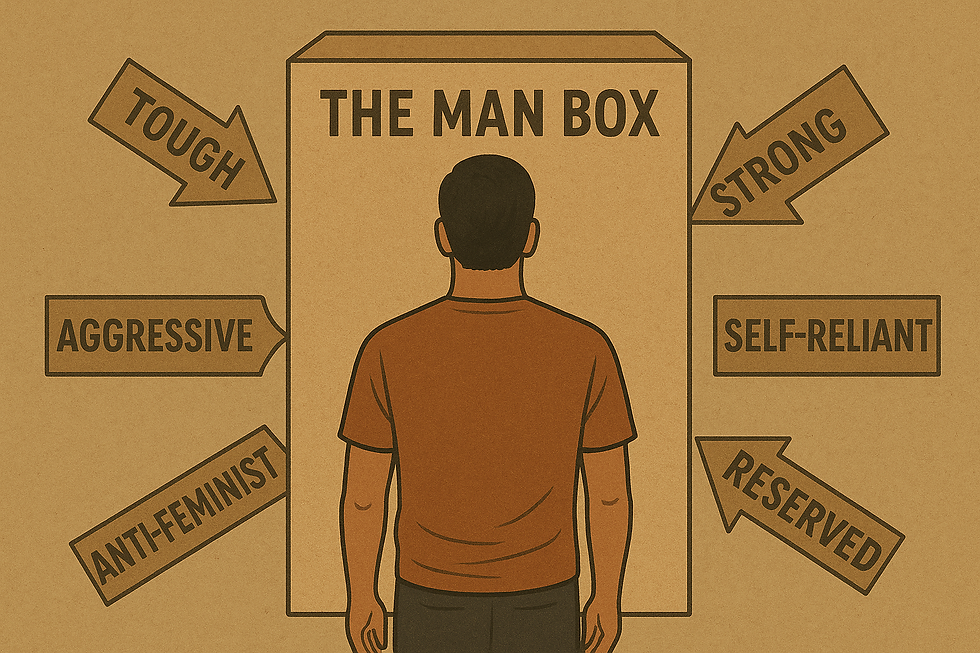
We can’t discuss men’s mental health without addressing toxic masculinity – the cultural conditioning that pressures men to be tough, anti-feminist, and driven by power. While there’s nothing wrong with strength or self-reliance, issues arise when men feel pressured to conform to a narrow view of manhood at the expense of their well-being. Toxic masculinity promotes the idea that needing help is a sign of weakness and that feelings like sadness or anxiety are “feminine” and should be rejected. Men learn to base their self-worth on control – having power, earning money, and showing no fear. Admitting “I’m not okay” threatens that image.
As senior content contributor at Recovery Unplugged, Albie Andrews points out, he grew up hearing phrases like “Be a man,” “That guy needs to suck it up,” or “What does he have to be depressed about?” whenever a boy showed hurt. Those messages “imprinted on [his] conscience” and taught him that asking for help could be seen as a sign of weakness. He felt he had to carry his pain alone because “awareness could be seen as weakness; asking for help could be seen as telling someone your private business; admitting something was overwhelming could be seen as giving up.” This illustrates the unwritten “rules” many men internalize.
Living inside this restrictive “man box” is exhausting and dangerous. Men do break down – they just often do it behind closed doors. When emotional pain is bottled up, it tends to surface in other ways: irritability or rage (since anger is one of the few emotions men feel permitted to show), increased substance use, reckless behavior, or even physical symptoms. Studies show men often cope with mental distress by “self-medicating” (through alcohol, drugs, or risky behaviors) rather than talking to someone. This avoidance only makes things worse. Depression and anxiety remain untreated, sometimes leading to the tragic suicide statistic mentioned above. As the Anxiety and Depression Association of America reports, “Toxic masculinity opposes mental and physical health treatment… suppressing mental health issues… can worsen symptoms and precipitate isolation, loss of jobs or friends, and even suicide.” In short, the very ideas of masculinity that men are taught ultimately isolate them when they most need support.
The good news is that parts of society are gradually starting to challenge these norms. High-profile male athletes and celebrities are beginning to share their mental health stories, breaking down the outdated idea that men must stay silent and invulnerable. When an NFL linebacker like Darius Leonard openly talks about his anxiety and therapy, for example, it helps other men realize it’s “okay to not be okay.” As Kalen Jackson of the Kicking the Stigma campaign explained, football players are often seen as the ultimate tough guys – so if they can discuss their feelings, it sends a strong message that seeking help isn’t a sign of weakness.
Similarly, grassroots movements and support groups are creating safe spaces for men to share their experiences and support one another. Psychologists note that men often feel more comfortable opening up once they’re with other men who “get it.” “Connection allows men to recognize their own humanity… when you reveal, you heal,” says therapist Martin Pierre, emphasizing how peer support and vulnerability go hand in hand.
Information Overload and the Self-Help Industry Trap

Besides stigma, another modern challenge is the overwhelming amount of available information. Ironically, we live in an era full of self-help resources – countless books, podcasts, YouTube videos, and apps all promising to help you “fix” yourself and your life. The self-improvement industry is a multi-billion-dollar enterprise, valued at around $10–11 billion globally each year. In 2020 alone, an estimated 45,000+ self-help books were published.
We clearly have no shortage of advice on how to be happier, more confident, or less stressed. Yet with all these guides and gurus, people still feel lost and “messed up.” In fact, rates of anxiety and depression remain alarmingly high. It raises the question: if there are $11 billion worth of happiness manuals and motivational seminars floating around, why are so many of us (men especially) still struggling to find peace?
Part of the problem is that the amount of advice doesn’t match its quality or personal relevance. Much of the self-help content out there is generic – it’s someone’s formula that worked for them, packaged as a one-size-fits-all solution. But you are not everyone else, and what works for one person might do nothing for another. As author Mark Manson points out, self-help is a market-driven industry more than a science; it isn’t peer-reviewed, so “God only knows where half of these people come from” or whether their advice is sound. The responsibility falls on the reader to determine what’s credible, and that’s not always easy.
What is easy is to get stuck in analysis paralysis, where you spend time consuming advice but never actually make changes. Manson gives a classic example: someone might read four books about dating because they’re too anxious to actually ask someone out – reading feels safer than doing. We often treat self-help as a substitute for real action: we feel like we’re working on ourselves by watching that next TED talk or starting yet another morning routine from a blog, but in reality, we might just be avoiding the uncomfortable steps that truly lead to growth.
Furthermore, much self-improvement messaging can unintentionally reinforce feelings of inadequacy. If you already feel “not good enough,” diving into self-help can sometimes make it worse – you compare yourself to some guru’s perfected routine and end up feeling more like a failure for not measuring up. This is why some critics say the industry thrives on keeping people unhappy: “Unhappy people buy things,” notes one Inc. report, and quick fixes tend to sell better than hard truths.
Many men are understandably skeptical of the entire self-help parade. You might ask: If all these books and apps haven’t solved anything, what will? This skepticism can lead to a sense of defeat or confusion about where to go next. Facing a flood of (often conflicting) advice, it’s no surprise that a man might throw up his hands and think, “I’ve tried nothing, and I’m all out of ideas!” – or feel too overwhelmed to try anything at all.
Self-Help vs. Self-Leadership: Finding Your Way

What I hope you see as an encouraging truth is that you don’t need to be “fixed” by some guru or magic solution, nor do you have to change who you are to start making meaningful progress. In fact, all mental health journeys are deeply personal – it’s about self-leadership rather than relying on someone else’s formula for your well-being. Self-help often assumes that “someone out there has the answer for me.” Self-leadership, however, suggests that the best answer for you lies within yourself – in your willingness to honestly explore your feelings, values, and needs, and to take initiative in seeking what helps you thrive. It means you are the active creator of your own recovery or growth, rather than a passive recipient of advice.
This perspective aligns with what many experienced coaches and therapists see: each person's journey to mental wellness is unique. What helps one person may not help another, and that’s totally fine. You are not broken or weak – as one psychologist says, “You are beautiful and complete just as you are.” There may be parts of you that are hurting or habits that aren’t helpful, but you, as a person, are not a lost cause in need of a total overhaul. Starting a mental health journey means rediscovering the intrinsic value, wholeness, and strength already within you, often hidden beneath stress, pain, or years of pretending to be okay.
So, instead of searching for a one-size-fits-all solution, give yourself permission to start small and personalized. Consider it an experiment where you are the expert on yourself. You can try different tools to see what positively influences your mood, outlook, or life. Feel free to mix approaches – maybe journaling to vent your thoughts, engaging in daily exercise to relieve stress, having occasional conversations with a trusted friend or mentor, and yes, reading insightful books or articles too. But you’re doing these activities to support your well-being, not because someone else insists you must. If something doesn’t resonate or stops working, you can switch to something else. That’s self-leadership: guiding your own growth with curiosity and self-compassion, rather than rigidly following someone else’s script.
First Steps to Beginning Your Journey

After understanding the barriers, you might wonder, 'Where do I actually start?' The first step is recognizing that it’s okay to prioritize your mental health – it’s essential. As Andrews (mentioned earlier) openly states, “Life gets complicated and overwhelming, and it’s perfectly natural to seek help for the pressure, confusion, and trauma it throws your way. In other words, be a man and get help when you need it.” Reframing it this way – that taking care of your mind is a responsible, even manly, act – can help quiet that inner voice saying it’s “weak” to seek support. You deserve to feel better, and the people who care about you would undoubtedly agree. You might even consider that by facing your issues, you’re setting a positive example for others in your life.
Here are some practical ways to start your mental health journey:
Start with small, doable actions: When you’re overwhelmed, the idea of a complete life overhaul can be paralyzing. Instead, choose one or two modest habits to improve your mental health and stick to them. Think of these as experiments in self-care. It might be as simple as taking a 10-minute walk in the sun each day, setting a regular bedtime to improve your sleep, or writing down three things you’re grateful for at night. These may sound cliché, but basic habits like sleep, exercise, and structure have a surprisingly big impact on mood. For example, one man found that going to the gym became his lifeline: the routine and discipline of regular workouts gave him a sense of control and clear-headedness that literally “saved [his] life,” as he put it. “For those 90 minutes, I have peace. I have control,” he says, explaining how lifting weights quiets his mind and boosts his confidence. Now, the gym might not be your thing, and that’s okay. The point is to discover an activity that productively channels your energy and emotions. It could be running, playing an instrument, cooking, painting, woodworking, martial arts, hiking, etc. Anything that engages you and provides a healthy outlet or a sense of achievement. Try different activities and notice what makes you feel a little better or more in control. These activities can become anchors in your week, giving you something to look forward to and a buffer against stress.
Break the silence: One of the hardest yet most healing actions is to talk to someone about what you’re going through. It could be a close friend, a family member, or even an anonymous peer online. You might be surprised to find out that you're not alone. As Lewis discovered in a men’s support group, simply hearing others share similar struggles made him realize, “I wasn’t alone,” and lifted a huge weight. If opening up face-to-face feels too vulnerable at first, you could start in a more low-pressure way: join an online forum or community focused on men’s mental health, or write your feelings down in a journal or an anonymous post. The key is to externalize what’s inside your head. Simply expressing that you’ve been feeling depressed, anxious, or overwhelmed is a powerful first step. It transforms an amorphous internal burden into something you can examine and address. Remember Lewis’s advice: “If you don’t want to talk to someone you know, there are lots of other options, such as online charities, support groups, or forums. Just getting it out there how you’re feeling really makes so much difference.”
Find a safe space (or person): Not everyone will understand what you’re going through, so it’s important to connect with people who do. This might involve choosing a friend who has demonstrated empathy in the past, joining a support group for men, or consulting a therapist trained to create a non-judgmental environment for you. It can be intimidating to share your pain, but remember the saying from earlier: “When you reveal, you heal.” Sharing your story in a safe place can help reduce shame and loneliness, piece by piece. If you're unsure where to find such a space, consider resources like local mental health organizations, community centers, or online groups dedicated to men’s mental health. Often, simply listening to other men discuss their emotions (on a podcast, in a group, etc.) can help you feel more comfortable with your own.
Embrace patience and self-compassion: Remember that healing is a nonlinear process. You won’t go from zero to hero overnight. It’s called a journey for a reason – there will be progress and setbacks. Some days you’ll feel motivated and optimistic, while others you might feel like nothing’s changing. That’s okay. Don’t judge yourself for where you are; you’re learning a new way to relate to yourself after years of doing it differently. Think of it this way: if a good friend said, “I’m really struggling,” you wouldn’t respond with harshness or shame. You’d listen, offer support, and remind them they’re not alone. Try to treat yourself with that same kindness. Celebrate small wins like “I opened up to my friend,” “I made that therapy call,” or “I got out of bed on time today despite feeling low.” When setbacks occur, such as an anxious episode or an unproductive week, avoid falling into catastrophic thinking. It doesn’t mean you’ve failed; it just means you’re human and still figuring things out. Keep going. Over time, those small steps truly add up to meaningful change.
Think of professional help as a tool, not a crutch: A therapist or counselor can be a valuable partner at the start of your journey. Sadly, many men misunderstand what therapy is. They might wonder, “Why should I spill my guts to a stranger?” or assume that therapy is only for those with serious issues. In fact, therapy offers professional guidance to help you manage your thoughts and feelings – similar to hiring a fitness coach to get in shape. The goal isn’t to make you dependent or label you as “ill”; it’s to equip you with coping skills and insights for life. As Kevin Simon pointed out, many men “don’t know what they don’t know” about handling emotions. Therapy can teach those missing skills. If you’re unsure, you can start by scheduling just one session and treating it as a test run. Therapists are accustomed to clients (especially men) feeling nervous or skeptical initially. A good therapist will meet you where you’re at and won’t force you to discuss anything you’re not ready for. Also, remember that you are in control. You can choose a therapist you feel comfortable with (it’s okay to “shop around” for a good fit), and you set the pace. Many men are pleasantly surprised after taking that first step; as one of my favorite rappers, Logic, said in an interview about finally seeing a therapist, “She’s the bomb.” It can be reassuring to have a confidential space to release everything that’s been bottled up. These professionals have dedicated their lives to supporting others and have received specialized training to do so. They are there to help, not judge.
Moving Forward
Starting your mental health journey as a man today is undeniably tough – but it’s one of the bravest and most fulfilling things you can do for yourself. Yes, you’ll be fighting against years of conditioning that told you to “tough it out.” Yes, you might feel vulnerable and out of your comfort zone at first. But think about the alternative of continuing to hold everything in and struggling alone. You’ve seen where that path leads for far too many men – to broken relationships, burnout, substance abuse, or worse. You have the opportunity to break that cycle for yourself and perhaps even inspire others along the way.
To recap, the journey is difficult partly because society hasn’t always allowed men to embark on it. Due to stigma, toxic masculinity, and uncertainty, many men often delay dealing with their mental health. Despite these challenges, a way forward exists. It begins by giving yourself permission to focus on your mental health, seeking understanding voices instead of bottling up feelings, and taking small steps. Remember that you are not defined by your darkest days or by the stoic mask you may wear. Beneath all that conditioning, you are a complete human being with a full range of emotions, and you have the right to experience and work through them all.
Lastly, remember that you don’t have to face this alone. By reading this, you've already joined a larger conversation and community of men who are choosing growth instead of collapse. There are people out there who care, and resources available to help. As Andrews says, “You don’t have to stay [trapped] there… It’s OK to reach out for help and recognize you have some things to work on.” Taking that first step – whether it’s writing in a journal, texting a friend, joining a group, or scheduling a therapy session is an act of strength. It’s you taking charge of your life. It’s you self-leading. As you do, you’ll find that although the journey can be tough, it’s worth it. You deserve to feel seen, understood, and to heal. Step by step, you will get there.


Comments